Amazing Galls and a Fire Book
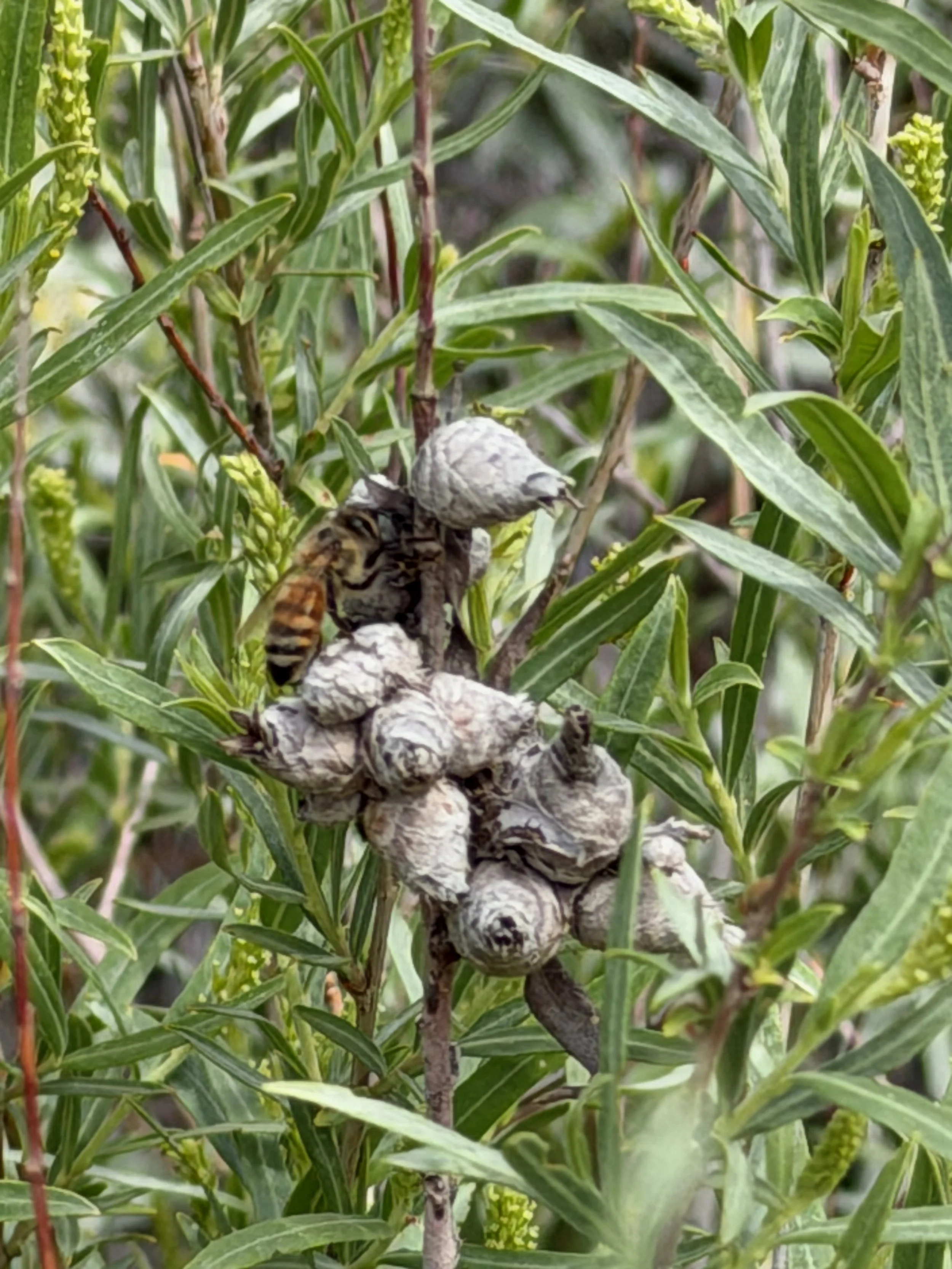
Willow Pinecone Galls at Sawhill Ponds in Boulder, Colorado. Photo by Carolyn Combs
While preparing to lead wetland field trip, I noticed these beautiful yet perplexing structures on a small willow branch. They looked like small, grey-brown pinecones. Why were there pinecones on a willow? I snapped a photo and noted their location. This would be a fun mystery to share with children!
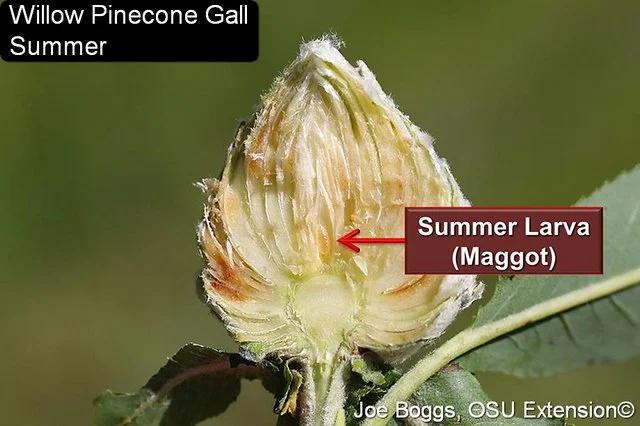
With the help of Google Lens, followed by a visit to a webpage by Joe Boggs at The Ohio State University, I learned that these were willow pinecone galls. In the spring, willow pinecone gall midges (Rabdophaga strobiloide) lay eggs near the tip of willow branches. The eggs develop into larvae, who inch up to the developing buds at the branch tips. There, they secrete chemicals that cause the bud to stop elongating. Layers of protective, overlapping leaves form a cone-like structure around each larva. Throughout the summer, the growing larvae feast on sugars made by the willow. After wintering within the gall, they pupate and metamorphose into midges (tiny flies) the following spring. Some scientists consider these flies to be a keystone species because their larvae provide food for myriad birds and host many species of parasitic wasps. Additionally, at least 31 other insect species lay their eggs on and around their galls. I hope to make galls and their creators part of many more field trips.
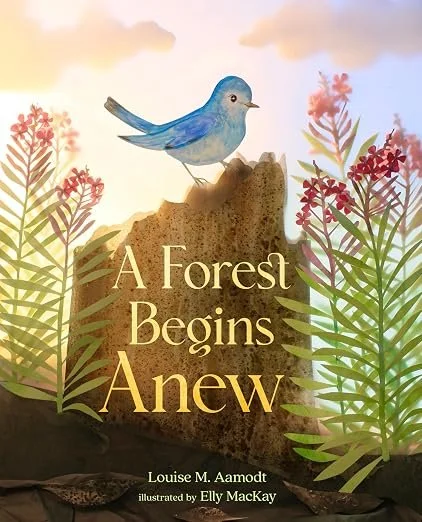
Finally, with a challenging fire season underway in the West, I’d like to recommend the recent STEM picture book A Forest Begins Anew by Louise M. Aamodt, illustrated by Elly MacKay, about forest fire and climate change. It’s also about hope and renewal in the face of loss. Rhyming, lyrical language, and vivid, eye-catching illustrations tell the story of how a fire, despite its destructive power, ultimately renews a forest. An author’s note draws out the parallels between loss and recovery in our lives and resilience in the forest, bringing solace and building empathy and appreciation for nature. Back matter provides clear, child-friendly information about the organisms and concepts presented in the poetic text. Add this to your collection of expository literature today!