Alpine Wildflowers and a Dandelion Book
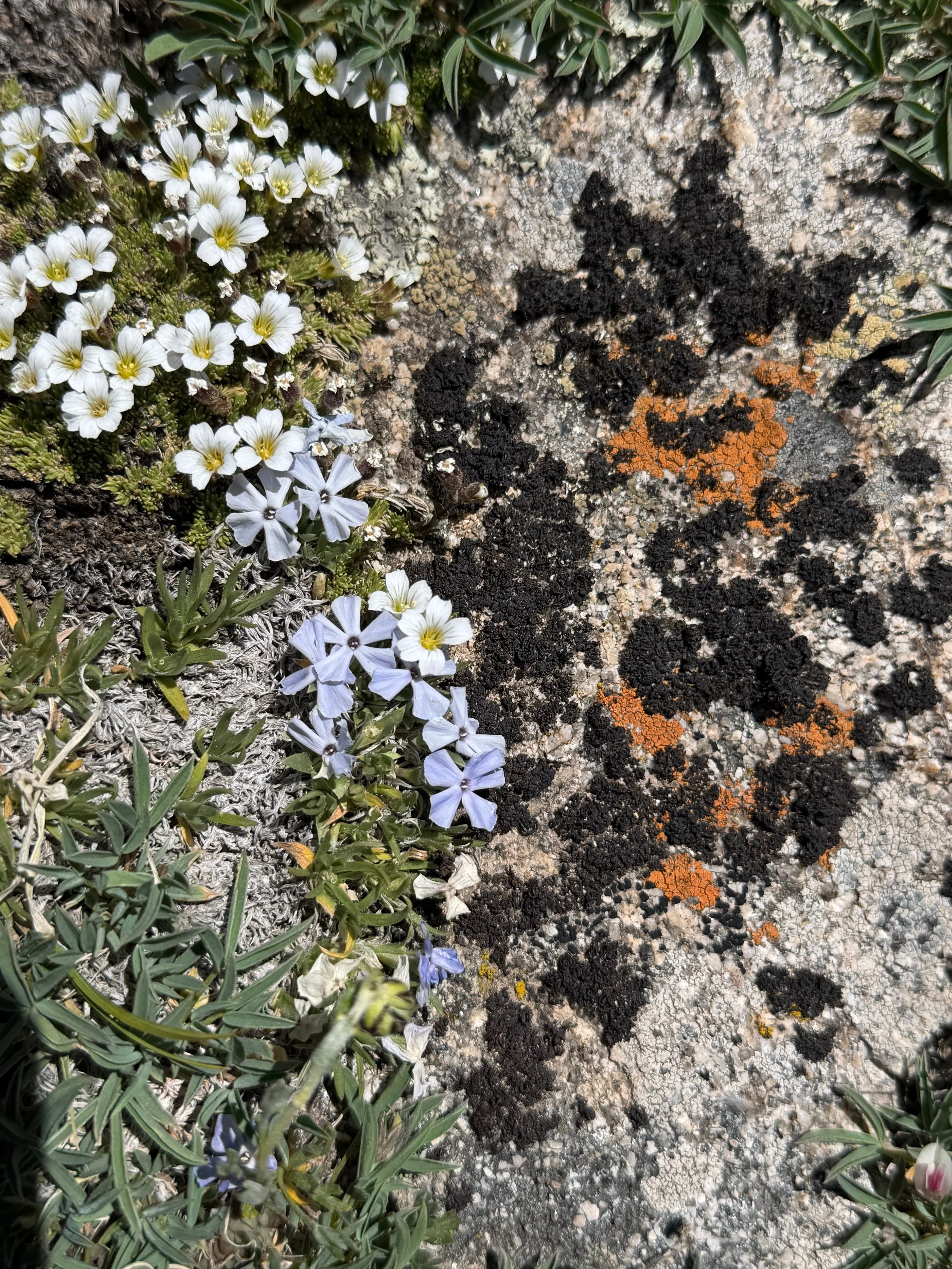
Alpine Sandwort (Cherleria obtusiloba) top white flowers and Alpine Phlox (Phlox pulvinata) lower purple flowers at Rocky Mountain National Park. Photo by Carolyn Combs
One of the highlights of my summer was attending an alpine wildflower course at Rocky Mountain National Park. That day, up at around 11,300 feet, we stepped out of a van into finger-freezing, earsplitting, blow-you-down winds. Tough conditions for observing wildflowers, but in a way, it was perfect! The weather persuaded us to crouch down low and shelter behind rocks, just like the wildflowers do. We experienced the alpine tundra as they do – cold, windy, dry, with a high UV index. And that was during the summer!
Just a few steps onto the tundra, we began to take in a grand show of miniature wildflowers. How do these flowers survive in such an extreme environment? For each plant, our guide described clever adaptations, finely honed by evolution. Alpine Sunflowers (Hymenoxys grandiflora) – also, fondly referred to as Old Man of the Mountain– are coved in woolly white hairs containing heat-trapping spaces. Tiny Moss Compion (Silene acaulis) are specialized to withstand the fiercest winds. A stout, four-foot-long taproot anchors them firmly to the tundra and finds water. They can live for over a hundred years and might take a decade to start flowering, for resources are scarce. Whipple Penstemon (Penstemon whippleanus) smells like rotting meat to attract flies for pollination, since flies can zip around at lower temperatures than bees can. The list of adaptations is long and varied.
Toward the end of the day, we spotted an intruder on the tundra – a common dandelion (Taraxacum officinale). It turns out that they grow on all seven continents, even Antarctica! Their survival superpower is prolific, asexual reproduction, or cloning. Untethered from pollinators, they fling their parachuted seeds far and wide via wind, water, fur, and foot. So far, they are the only invasive that’s made its way up to the Rocky Mountain tundra. But in our changing, warming climate, others may follow.
Though I was cold and wind-beaten, leaving felt bittersweet. Clearly, humans aren’t adapted to comfortably live on the alpine tundra. The van felt snug, just right for us. But visiting this liminal place was a spellbinding and exhilarating experience. I hope you can visit too.
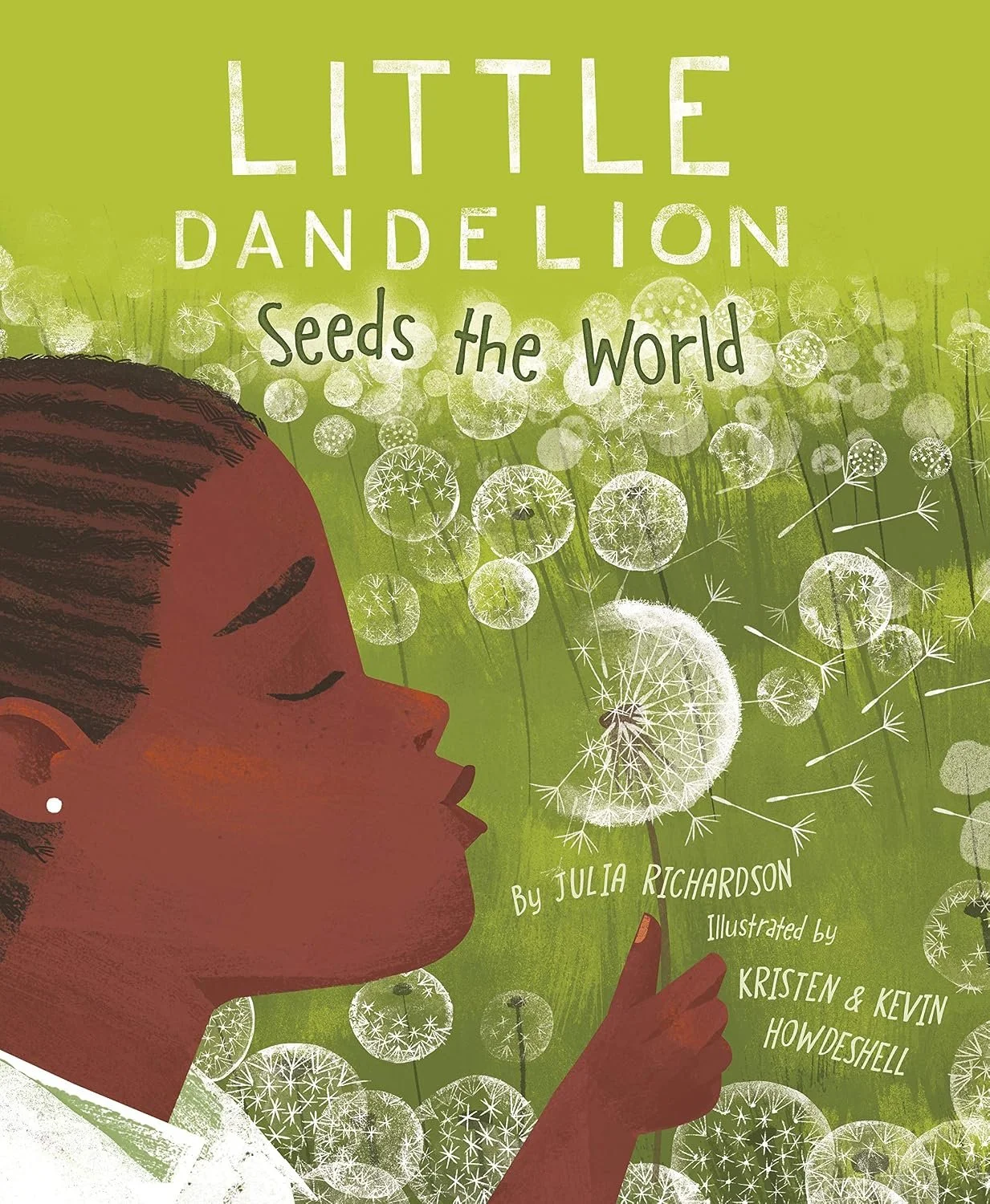
Though I didn’t find a recent picture book about alpine wildflowers, I did find this outstanding title – Little Dandelion Seeds the World, written by Julia Richardson and illustrated by Kristen and Kevin Howdeshell. With delightful rhyme, repetition, and onomatopoeia, it’s a perfect story-time introduction to plant growth, seed dispersal, and the seven continents. It shows how one small, resilient plant spread across the globe. Rich, atmospheric illustrations evoke iconic landscapes and animals on the continents. You’ll love reading it aloud, and little listeners might be on their feet, flying and fluttering all around.