Bug Love and a Book
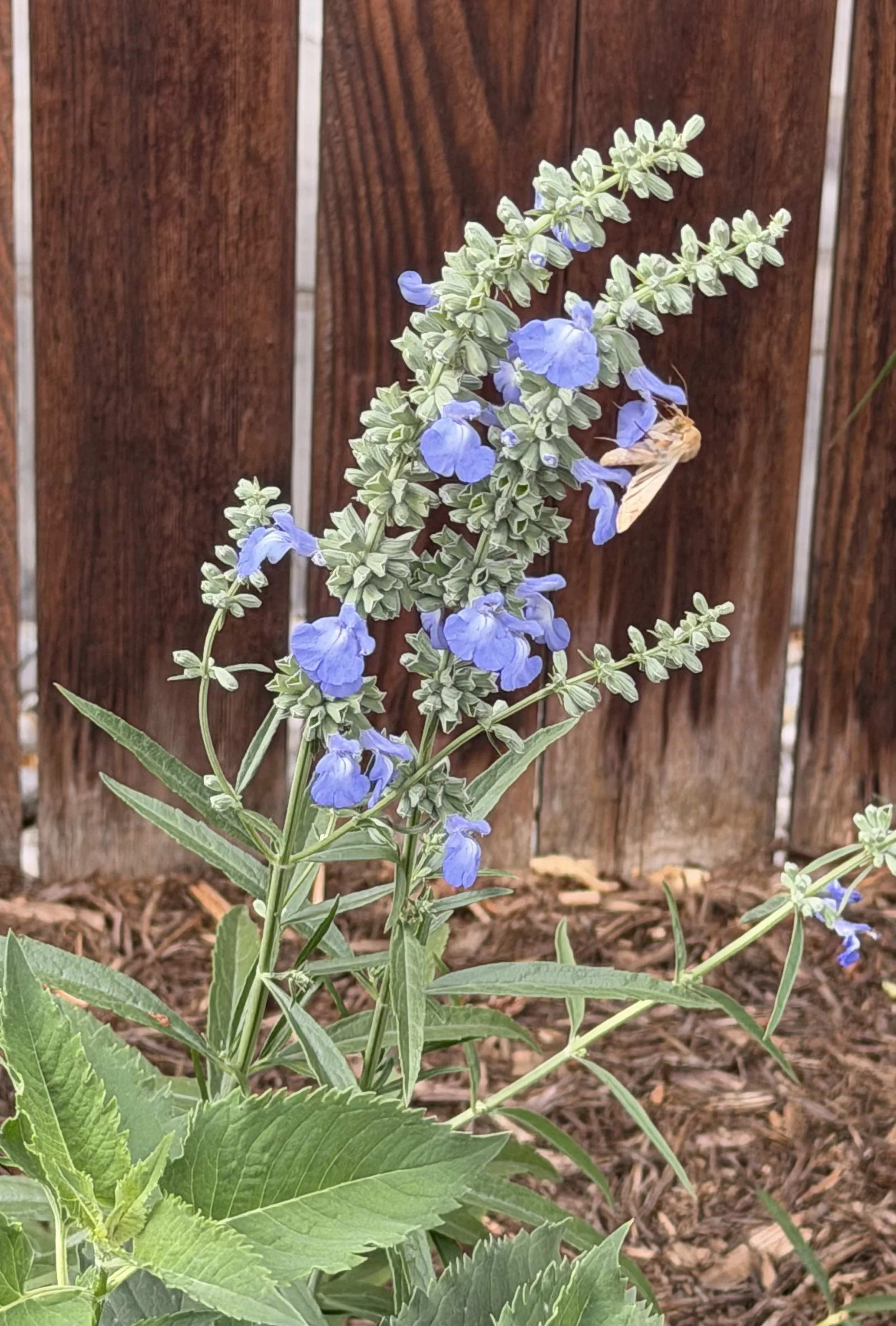
Isabella tiger moth (my best guess at it’s identity) sipping nectar from pitcher salvia in our nascent pollinator garden.. Photo by Carolyn Combs
One of my favorite kinds of field trips to lead focuses on insects. It has taken me a few seasons as a naturalist to realize how special these field trips are, but now I appreciate their magic. First off, insects are easy to spot along trails. We have a great time with buggy safaris and get close-up views with hand lenses. Our larger wild neighbors, like bears and coyotes, rarely make even brief appearances. We go on to explore the vital roles these small but mighty creatures play in ecosystems, including pollination, decomposition, and providing food for myriad animals, even bears. If a student still doesn’t think insects are cool by the end of the hike, hopefully they’ll know why insects are worth protecting. All that, plus insects boast some of the most amazing adaptations in the animal kingdom.
Recently, I learned about the important discovery of an amazing and extremely strange adaptation. I was lucky enough to be part of a group that took a laboratory tour with the awe-inspiring entomologist Dr. Samuel Ramsey, recipient of the Marvin H. Caruthers Endowed Chair for Early-Career Faculty at the University of Colorado Boulder and a National Geographic Explorer. That day, he was eager to show us how his lab dissects Varroa mites (Varroa destructor). In 2019, Dr. Ramsey figured out how these mites kill honeybees. The mites feed on the bees’ fat bodies, weakening them and their immune system. The mites also infect the bees with deadly viruses. Now Dr. Ramsey’s lab is looking for ways to stop the mites from killing honeybees. By dissecting the mites, they’ve found that female mites rapidly produce a single gigantic egg. Even a super insect mom doesn’t have the resources to create such an egg on her own. Instead, the moms steal the ingredients for their egg yolks from the bees. The researchers dubbed this never-seen-before process kleptocytosis. It gives scientists another process to disrupt in their quest to save honeybees, which provide billions of dollars in pollination services to North America every year.
I left the tour even more stoked to share the wonders of insects with students, though I knew I wouldn’t be delving into kleptocytosis. Dr. Ramsey passed along another, more child-friendly idea to spread. He emphasized that we can save native bees while also saving honeybees. In fact, we must do both! We can all help by planting pollinator-friendly plants, especially those native to our local areas. This summer, we had great fun tending and watching our new native garden come into bloom (see photo at top).
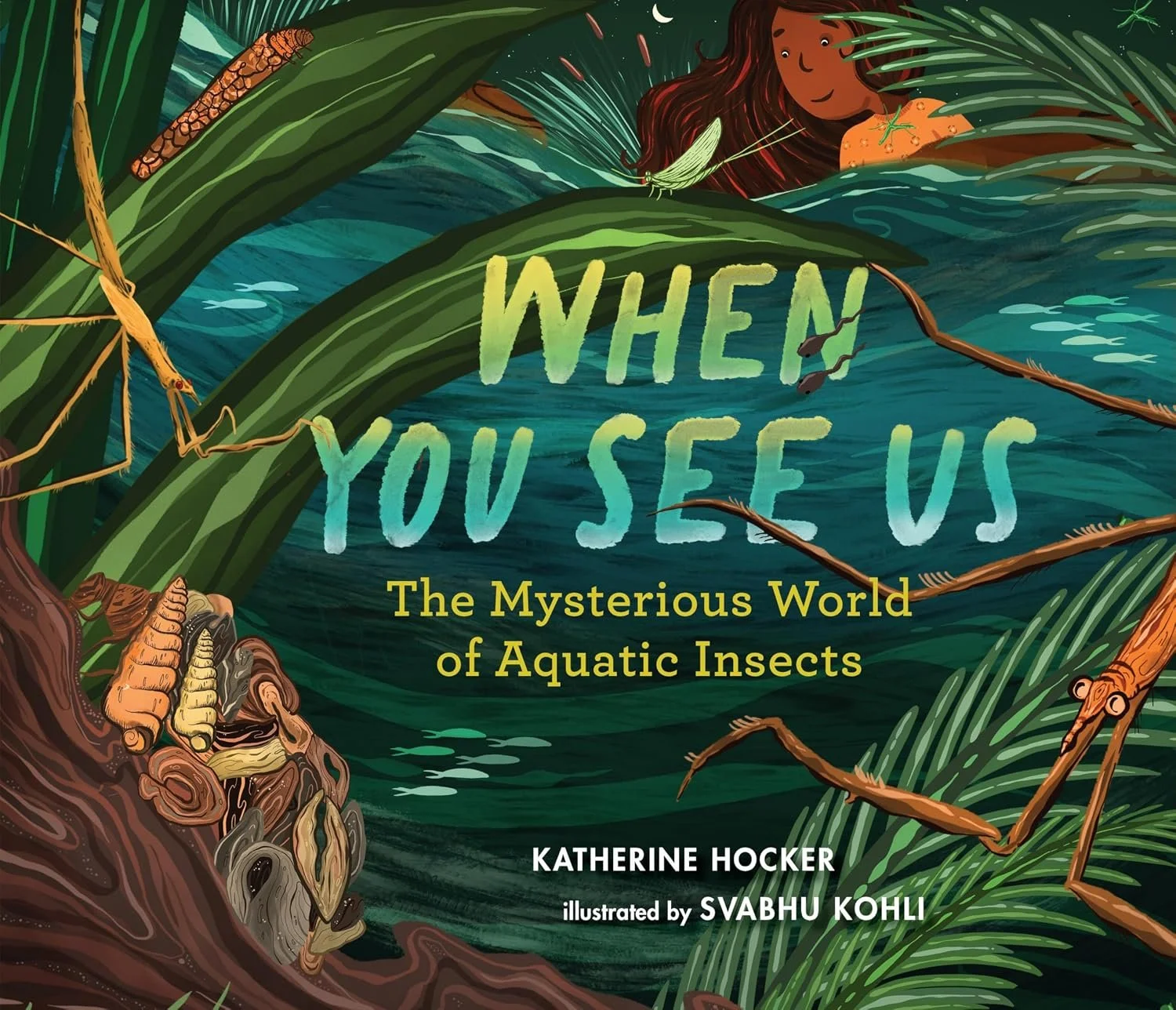
Because wetlands are nurseries for so many insects, I especially enjoy leading insect-focused field trips at our local ponds. When You See Us: The Mysterious World of Aquatic Insects, written by Katherine Hocker and illustrated by Svabhu Kohli (Candlewick Press, 2026) is a gorgeous, inviting book. It introduces aquatic insects and highlights life stages most people never see. For example, before a dragonfly becomes a fierce insect hunter on the wing, it’s an equally skilled hunter of insects, tadpoles, and fish underwater. I love how the ending invites the reader to contemplate these creatures' transformative lives and imagine the possibilities for growth and change in their own lives. The underwater illustrations are deftly illuminated to show details and beauty we might otherwise miss. The back matter provides more information on specific aquatic insects and shows readers how to make their own observations. Add it to your science collection at home or school to spark curiosity about the natural world in spring or at any time of year.